Allergies can sneak up on you, especially during spring and fall, but they can strike year-round too. In this quick guide, I break down the most common allergy symptoms, how to tell them apart from a cold or flu, and which over-the-counter (OTC) allergy medications may help. From antihistamines to nasal sprays, here’s what to know before your next pharmacy run.
Quick Allergy Relief Guide
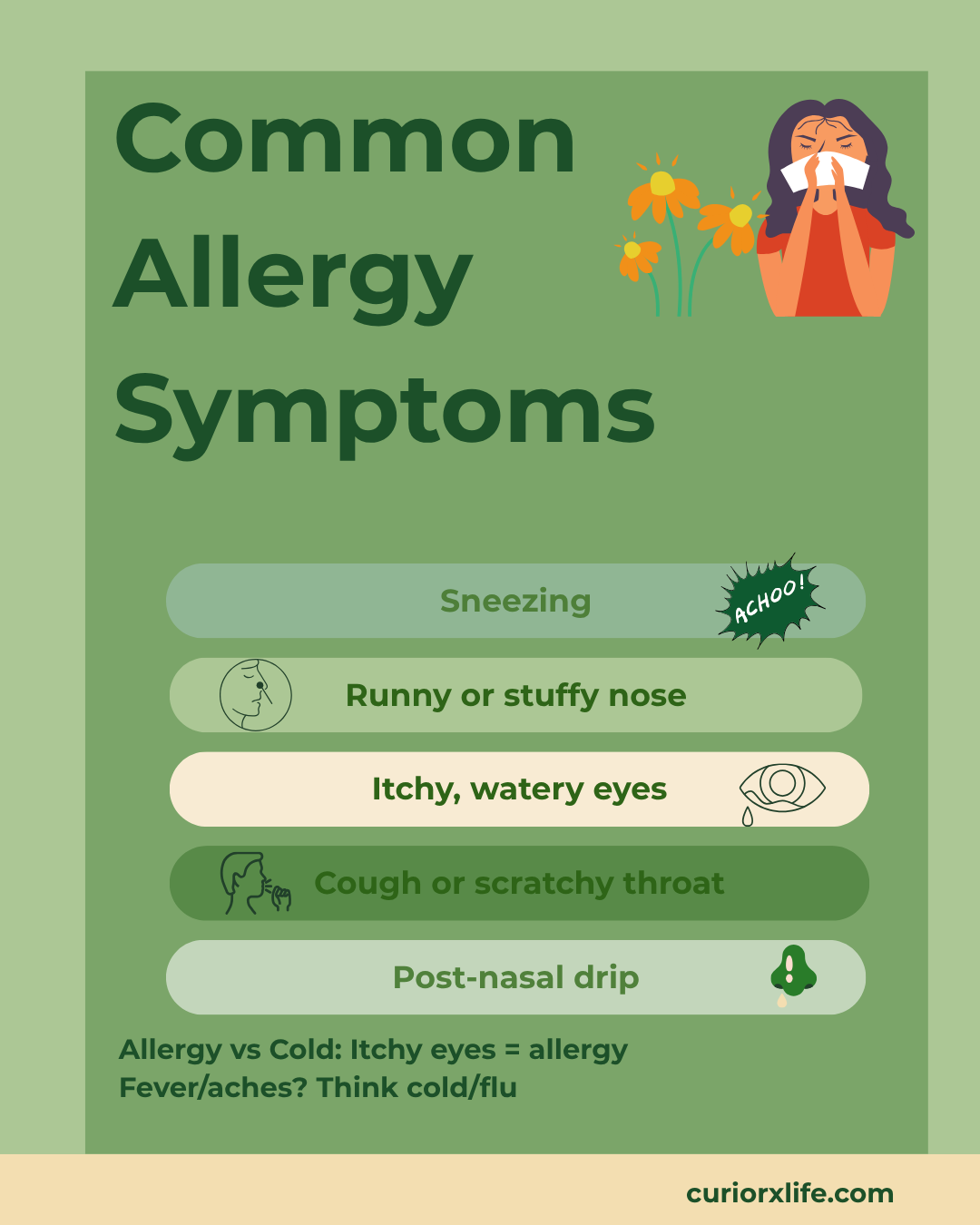
Sneezing, runny or stuffy nose, itchy watery eyes, cough, and post-nasal drip are common allergy signs. Fever and body aches usually point to cold or flu instead.
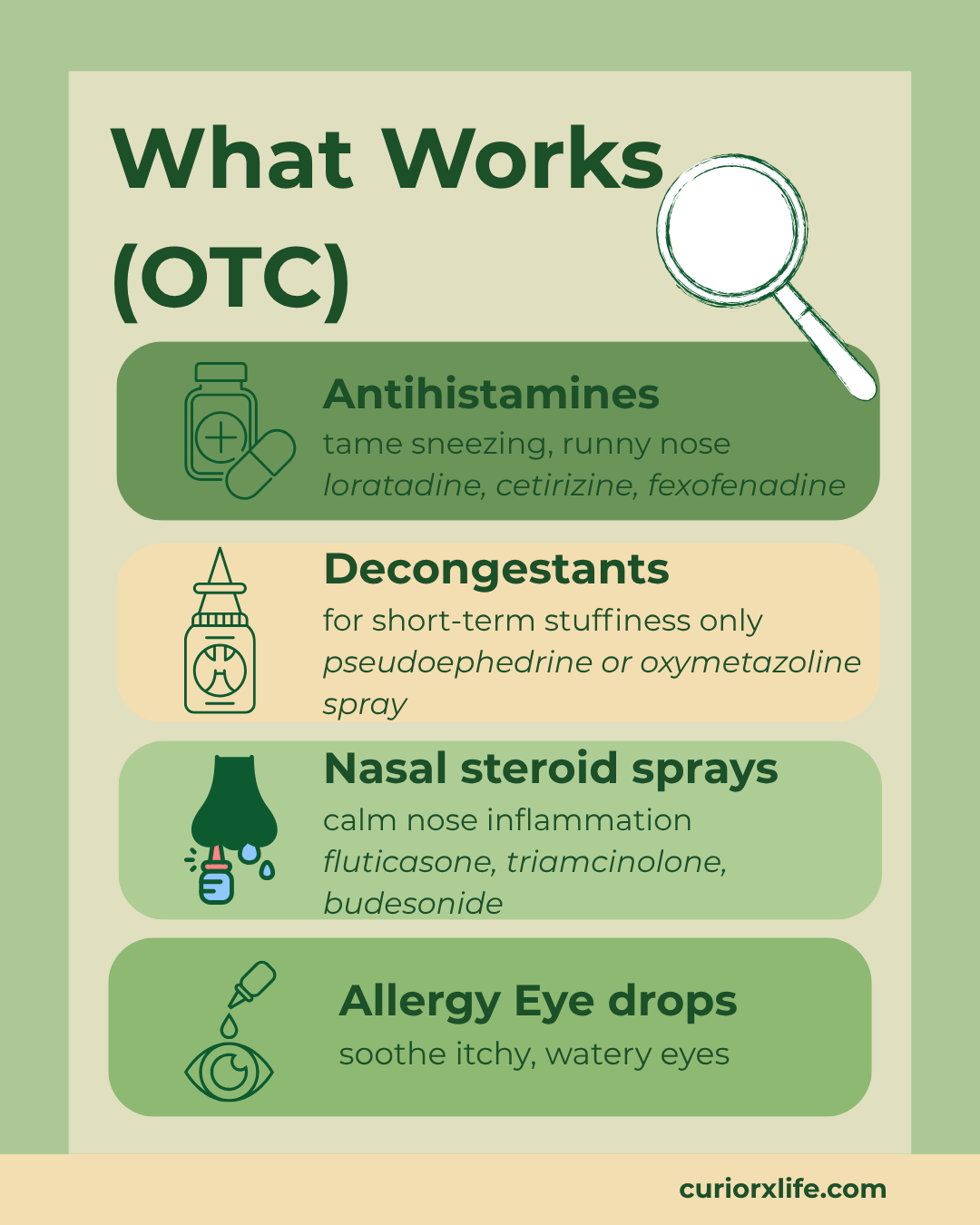
Antihistamines (like loratadine or cetirizine) help block allergic reactions. Decongestants reduce nasal swelling but should be used short-term. Nasal steroid sprays and allergy eye drops can provide targeted relief.

Non-drowsy antihistamines are great for daytime use, while drowsy ones may help at night. Decongestants come in oral and nasal forms, but limit nasal sprays to 3 days to avoid rebound congestion.
Safety Concerns About Benadryl (Diphenhydramine)
Recently, allergy specialists at Johns Hopkins and UC San Diego have called for retiring diphenhydramine (Benadryl) as an over-the-counter staple, citing risks like sedation, cognitive impairment, and possible long-term neurological effects. Experts recommend newer antihistamines such as loratadine, cetirizine, or fexofenadine which offer similar relief with fewer side effects.
My take: Check with your pharmacist or doctor before taking diphenhydramine. They can guide you to finding the safest option that treats your symptoms.

Rinse your nose daily, change clothes after outdoor time, wash bedding weekly, and start meds before peak pollen days. Keep windows closed and ask a pharmacist if you’re unsure which OTC product to choose.
Seek Medical Advice
If OTC medications don’t help, or you have symptoms like fever, facial pain, or shortness of breath, see your healthcare provider.
💊 This post is part of my OTC Survival Guide series. Check out the other topics here.

What are your thoughts?