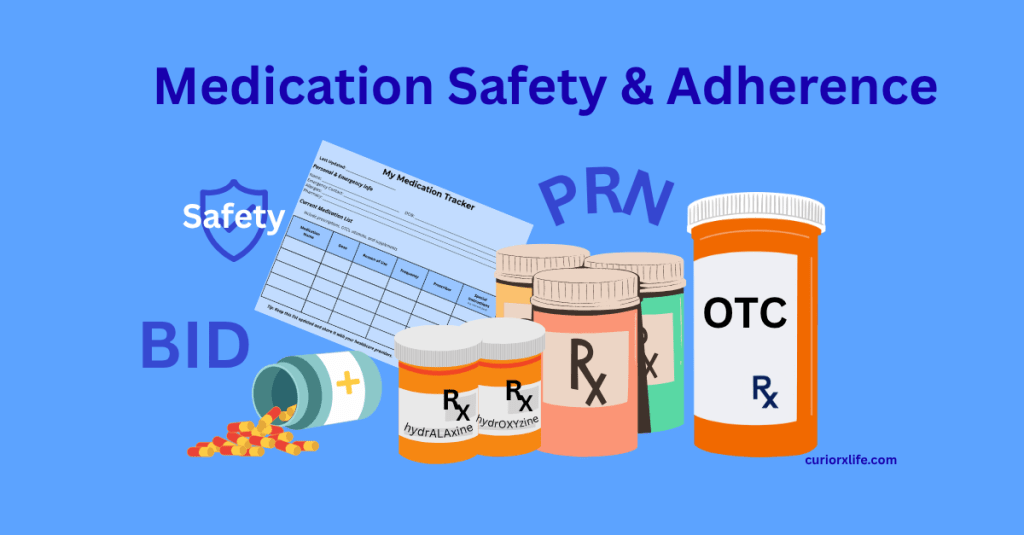
Did you know that only about half of patients with chronic conditions take their medications as prescribed? As a pharmacy student in my final year, I’ve seen firsthand how medication non-adherence isn’t just a personal issue, it’s a public health crisis. Skipping doses, misunderstanding instructions, or mixing up medications can lead to worse health outcomes, avoidable hospitalizations, and even 125,000 preventable deaths each year in the U.S. alone costing $300 billion annually.
But the good news is that most of these problems are preventable. Whether you’re a patient, student, or healthcare provider, understanding medication safety and adherence can save lives. Let’s break it down.
What Is Medication Adherence and Why It Matters
Adherence is taking medications as prescribed, both in timing and dose, not just taking them at all. Yet, studies has shown that 30–50% of patients with long-term conditions struggle with non-adherence, and that number jumps to 76% for those managing multiple illnesses.
But before we blame patients, let’s recognize the bigger picture:
- Complex treatment plans; who can keep track of 10+ pills a day?
- Sky-high drug costs; choosing between groceries and meds shouldn’t be a thing
- Poor communication from providers; medical jargon doesn’t help anyone
- Limited health literacy; not everyone knows what “take PRN” means
Fixing adherence means addressing these systemic barriers, not just telling patients to “do better.”
Common Medication Safety Risks
- Look-Alike/Sound-Alike (LASA) Drugs
- Ever seen a prescription for hydrALAzine (for blood pressure) and thought it was hydrOXYzine (an antihistamine)? Yeah, mix-ups happens.
- Duplicate therapy
- Taking two meds for the same condition without realizing it
- OTC + Rx interactions
- That innocent St. John’s Wort supplement? It can mess with your antidepressants. Always check with your pharmacist.
- Improper storage
- Leaving insulin in a hot car or pills within a toddler’s reach can have dangerous consequences.
- Skipping doses or stopping early
- “I feel better, so I’ll stop my antibiotics!” –> Hello, antibiotic resistance
These mistakes aren’t rare, they’re tracked by FDA MedWatch, ISMP, and WHO pharmacovigilance programs because they cause real harm.
How to Stay Safe & Take Meds Effectively
For Patients & Caregivers
- Maintain an up-to-date medication list, including over-the-counter drugs and supplements
- Use alarms or pill organizers, phone reminders to stay on schedule.
- Always ask questions at the pharmacy if something is unclear
- Request information to be translated to your preferred language
- Remember: If a medication looks different than usual, don’t ignore it, consult your pharmacist before use.
For Students
- Perform thorough medication reconciliation during rotations.
- Watch for duplicate therapy or drug-drug interactions
- Use the teach-back method to ensure patients understand instructions.
For Healthcare Pros & Industry
- Implement risk evaluation and mitigation strategies per FDA guidance
- Encourage patient reporting to MedWatch or ISMP
- Use pharmacist-driven MTM or TMR services which have been shown to reduce hospital admissions and boost adherence.
Final Thoughts
Medication safety isn’t just about taking pills. It’s about using them smartly, safely, and consistently. It isn’t just about rules but about people. Whether you’re a patient, student, or provider, we all have a role to play in reducing risks and enhancing health outcomes.
Helpful Tools & Resources
- FDA MedWatch (http://www.fda.gov/safety/medwatch) – for reporting adverse events
- ISMP (http://www.ismp.org) – medication error prevention and safety alerts
Check out this FREE PRINTATBLE MED TRACKER for personal use or to share with your PCP at next visit
References
- Garfield, Sara, and Gaby Judah. “Learning from Successes: Designing Medication Adherence Intervention Research so That We Can Learn What Works and Why.” BMJ Quality & Safety, vol. 31, no. 2, 12 July 2021, pp. 83–85, https://doi.org/10.1136/bmjqs-2021-013381.
- Schnorrerova, Patricia, et al. “Medication Adherence and Intervention Strategies: Why Should We Care.” Bratislava Medical Journal, vol. 126, 10 June 2025, https://doi.org/10.1007/s44411-025-00227-0.
- FDA. MedWatch: FDA Safety Information & Adverse Event Reporting Program. U.S. Food and Drug Administration, 2019, http://www.fda.gov/safety/medwatch-fda-safety-information-and-adverse-event-reporting-program.
- American Heart Association. (2024, January 18). Medication Adherence – Taking Your Meds as Directed. http://Www.heart.org. https://www.heart.org/en/health-topics/consumer-healthcare/medication-information/medication-adherence-taking-your-meds-as-directed
- ISMP. Institute for Safe Medication Practices. https://www.ismp.org

What are your thoughts?