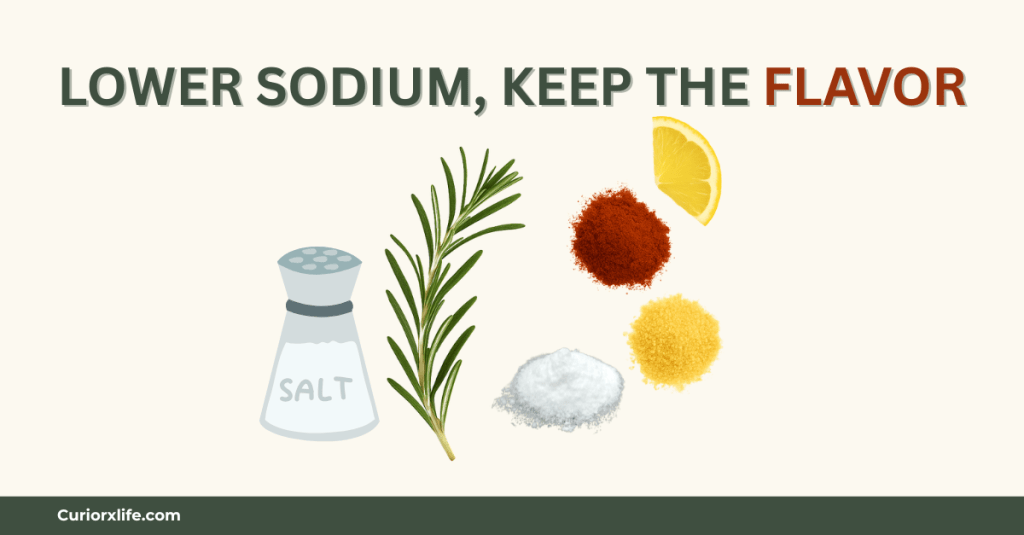
When most people think about lowering sodium, they picture bland, flavorless food, the kind of “health” meals no one gets excited about. I’ve learned that cutting back on salt doesn’t have to mean sacrificing taste. In fact, finding creative ways to keep flavor while lowering sodium can have a big impact on heart health, blood pressure, and even medication effectiveness.
Why Pharmacists Care About Sodium
Sodium plays a key role in the body, but too much can be harmful, especially for patients with:
- High blood pressure (hypertension)
- Heart failure
- Chronic kidney disease
- Certain medication regimens (e.g., diuretics, ACE inhibitors, ARBs)
High sodium intake can raise blood pressure, increase fluid retention, and make some conditions harder to manage, which can lead to more medications or higher doses.
Where Sodium Hides in Your Diet
It’s not just the salt shaker! Common hidden sources include:
- Canned soups and vegetables (especially in brine)
- Processed meats like bacon, ham, and deli turkey
- Condiments (soy sauce, salad dressings, ketchup)
- Pre-packaged seasoning blends and instant noodles
- Restaurant and fast-food meals
A Student Pharmacist’s Perspective
I get it, lowering sodium isn’t easy. I mean, I’m African, and a big part of my diet is traditional African dishes, many of which are rich in flavor but can also be heavy on the salt, bouillon cubes, and seasoning blends. Changing the way you cook or season food isn’t just about “cutting salt”, it’s about adjusting flavors you’ve loved your whole life.
That’s why I focus on small, realistic changes instead of trying to overhaul everything at once. I’ve learned that fresh herbs, garlic, ginger, citrus, and pepper-based spice blends can still give me the bold, satisfying flavors I grew up with, without so much sodium. It’s not about losing the cultural foods I love; it’s about tweaking them so they love me back.
On my rotations, I’ve seen firsthand how sodium intake can impact patients, sometimes in ways they didn’t expect. For example, a patient with heart failure who was doing “everything right” still had fluid buildup because they were eating canned soups daily, thinking they were a healthy choice. Simple education on reading labels and swapping to low-sodium options made a big difference in their fluid balance and blood pressure.
Flavor Without the Salt
You don’t have to give up flavor when cutting sodium. You just have to get creative. Here are some easy swaps and seasoning hacks:
Swap High-Sodium for Lower-Sodium Options:
- Regular soy sauce → Low-sodium soy sauce or coconut aminos
- Canned vegetables in brine → No-salt-added canned or frozen
- Packaged seasoning mixes → DIY spice blends
- Processed deli meat → Fresh roasted chicken or turkey
- Salted butter → Unsalted butter + herbs
- High-sodium bouillon cubes → Homemade spice paste with ground crayfish, dried mushrooms, or smoked fish powder
Boost Flavor Naturally:
- Fresh herbs: parsley, basil, dill, West African herbs like scent leaf (ocimum gratissimum), uziza leaf (piper guineense), or bitter leaf (vernonia amygdalina)
- Spices: smoked paprika, cumin, turmeric
- Citrus zest or juice: lemon, lime, orange
- Garlic & onion (fresh or powder)
- Vinegars: balsamic, apple cider, rice vinegar
Practical Tips to Get Started
- Read the Nutrition Label: Look for foods with less than 140 mg sodium per serving (considered low sodium).
- Flavor First: Experiment with herbs, spices, and acids (like citrus and vinegar) before reaching for the salt shaker.
- Cook More at Home: You control what goes in your food.
- Make Gradual Changes: Your taste buds will adapt over time.
Lowering sodium doesn’t mean lowering quality or flavor. With simple swaps and a little creativity, you can protect your heart health while still loving what’s on your plate. As a future pharmacist, I’m here to remind you, small changes in your daily habits can make a big impact on your long-term health.
Disclaimer:
This post is for educational purposes only and is not a substitute for medical advice. Always consult with your healthcare provider before making dietary or medication changes.
Resources
- Morgan TO, Anderson AI, MacInnis RJ. ACE inhibitors, beta-blockers, calcium blockers, and diuretics for the control of systolic hypertension. Am J Hypertens. 2001 Mar;14(3):241-7. doi: 10.1016/s0895-7061(00)01266-8. PMID: 11281235.
- Centers for Disease Control and Prevention (CDC). (2023). Sodium and Food Sources. https://www.cdc.gov/salt/foods.html
- American Heart Association. (2020). Low-Sodium Diet for Heart Failure. https://www.heart.org/en/health-topics/heart-failure/treatment-options-for-heart-failure/low-sodium-diet
- National Heart, Lung, and Blood Institute. (2025). DASH Eating Plan. U.S. Department of Health and Human Services. https://www.nhlbi.nih.gov/education/dash-eating-plan

What are your thoughts?